
I grew up Catholic.
My parents were devoted Catholics until they later changed denomination and joined a Pentecostal church. I was in Class 6 at the time—a 10-year-old girl—already deeply immersed in Catholic doctrine and way of life. I had completed catechism and had begun receiving the sacraments. During school holidays, I attended morning mass faithfully. I remember my catechism teacher encouraging this so that I could become fully acquainted with the sacraments. I took it seriously. I was devoted.
Then something happened that caused my parents to leave the Catholic Church. One Sunday morning, my mum told me we would no longer be attending the Catholic Church. Being a child, I complied. When we arrived at our new church—which was just within our neighborhood—the service had already started. People were deep in prayer. One thing immediately struck me.
Everyone was praying in a language I could not understand. Later, I would learn this was called speaking in tongues. The prayers were loud. People paced around, lifted their hands, and prayed passionately. To my 10-year-old mind—coming from the quiet, solemn atmosphere of Catholic worship—it felt chaotic and strange. I felt completely out of place and confused. That is the only memory I have of that Sunday.
When we got home, I told my mum I would never go back to that church again. She probably didn’t think I was serious. But the following Sunday, as we prepared for church, I insisted I wanted to go back to the Catholic Church. My dad—being the democratic one—said I was free to worship where I wanted. So we parted ways. I went to my church, and they went to theirs. This went on for several months.
Eventually, loneliness crept in. My entire family had settled into their new church, except me. So one Sunday morning, I made a decision. I decided to give this new church a second chance. The same “chaos” happened again—but this time, I told myself that if my family could get used to it, so could I. And eventually, I did. That is how I became Pentecostal. Later, I would “get born again”—something I did almost every other Sunday during altar calls. My logic was simple: I had sinned during the week, so I needed forgiveness again, and then I would try to be good all over again.
I did not know what the gospel was. Not really.
This became my life through high school and into my first year of college. Then one day, after a heated argument with my mum about my behavior—I had become quite rebellious—something different happened. Instead of lecturing me as usual, she spoke to me gently. She told me I was a good girl. She said she hoped I wouldn’t waste my life based on how I had been behaving. She pleaded with me to calm down and just listen to her. Then she left the room. What followed was pin-drop silence.
It was as though all my sin and rebellion suddenly flooded my mind. I saw myself clearly—and I broke down. I cried uncontrollably. I pleaded with God to have mercy on me. I asked Him to be my Lord and Savior. I confessed my sins. I admitted how incapable I was of doing the right thing, no matter how hard I tried. I told Him I didn’t know where to begin, but I needed Him to teach me.
Right there, alone in my room, I became a true Christian.
I began reading the Bible—though I barely understood what I was reading. I would open it randomly and read whichever passage I landed on. That became my way of studying Scripture for years. I prayed a lot. I fasted a lot.
In campus, I became a devoted member of the Christian Union. I was in the intercessory ministry part of the church. Yet, I had very little knowledge of God’s Word. Most of my prayers revolved around what I needed—my future husband, my career, my children, my health, my aspirations. This was my Christianity—even after getting married and having my first two children. Up until 2021.
(You can read more about what happened next in the My Story section of the blog.)

Looking back, what I lacked was proper discipleship. When I became a believer in Jesus Christ, no one taught me how to read Scripture. I listened to sermons, yes—but that was it. Without God’s Word rooted in my heart, I became vulnerable to every kind of teaching. I had no framework for discernment. I couldn’t tell what was biblical and what wasn’t. It wasn’t until I began reading Scripture carefully and consistently that my eyes were opened. I started realizing that many of the beliefs I had held were not biblical.
Many Christians today—just like I once was—would struggle to clearly explain what they truly believe and why. Much of what they hold onto comes from tradition or teachings handed down when they first joined the faith. Few take the time to question or examine their beliefs. Unfortunately, some who do question their beliefs, only to realize how harmful or misleading they have been, may “deconstruct” their faith altogether. I would argue that many of these false beliefs stem from counterfeit gospels—teachings that appear Christian on the surface but are far from the truth.
For example:
- Some believe that perfect health is guaranteed to believers. They declare healing for themselves and loved ones, expecting God to comply. When illness persists or death occurs, their faith is shaken. Yet Scripture reminds us that suffering is part of the Christian life: “In this world you will have trouble” (John 16:33) and Paul writes that God’s power is made perfect in weakness (2 Corinthians 12:9).
- Others believe that every believer is promised wealth and material blessings on earth. They declare themselves rich, believing God guarantees prosperity. But when reality doesn’t match these expectations, they may feel disillusioned, dissatisfied, or even like “second-class” children of God. Paul reminds us instead to be content in every circumstance: “I have learned to be content whatever the circumstances” (Philippians 4:11–12).
- Some take verses out of context to claim they are gods, such as misinterpreting Psalm 82:6 (“I said, ‘You are gods; you are all sons of the Most High’”) to elevate themselves spiritually. This misbelief can distort prayer, turning it into an exercise of commanding God rather than submitting to Him. But Scripture teaches: “If anyone thinks he is something when he is nothing, he deceives himself” (Galatians 6:3). This leads to spiritual pride and self deception
In fact, the Bible warns that praying without knowledge of God’s Word can render our prayers empty or even displeasing to Him. We are to pray in alignment with truth, humbly submitting to God’s will: “Pray in the Spirit on all occasions with all kinds of prayers and requests. With this in mind, be alert and always keep on praying for all the Lord’s people” (Ephesians 6:18).
The point is -counterfeit gospels distort faith. They promise what Scripture does not guarantee, mislead believers about God’s character, and ultimately pull people away from the true gospel—the message of Jesus Christ, His death for our sins, and His call to repentance, faith, and holiness.
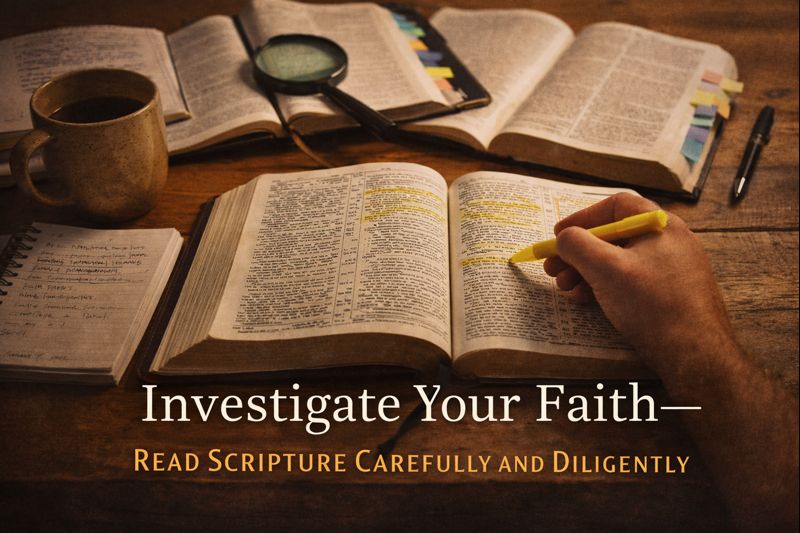
My hope and prayer is that Christians will awaken a new desire to know God’s Word in its entirety. I hope to stir in you a hunger to examine your faith, to read the Scriptures carefully—book by book—study them in their proper context, and seek to understand how to apply them in your daily life. Doing this will transform your mind (Romans 12:2), change your worldview, and protect you from deception. It will also strengthen your prayer life, as your prayers begin to align with God’s perfect will. When our hearts and words are in sync with Him, our prayers rise like sweet-smelling incense to the Lord (Psalm 141:2; Revelation 5:8).
As I reflect on my own journey, I see how easily I was led astray by teachings that looked like Christianity but were far from the truth. I know now that the only way to discern truth from deception is to ground ourselves in God’s Word, to know Christ deeply, and to live by His commands. The gospel of Jesus Christ is simple yet profound: He died for our sins, rose again, and offers us forgiveness, reconciliation, and new life. But it is not just a message to believe—it is a message to live out, a call to holiness, obedience, and love.
My prayer is that this post will stir a renewed hunger in you—to read the Bible diligently, study it carefully, and apply it faithfully. Let your faith be rooted not in tradition, human teaching, or emotion, but in the truth of God’s Word. Let your mind be transformed, your prayers aligned with His will, and your life a reflection of Christ’s love and holiness. When we do this, we are not only protected from counterfeit gospels, but we also experience the fullness of life God promises—the joy, peace, and purpose that can only be found in Him (John 10:10; Romans 8:28).
Let us not be content with shallow faith. Let us press in, seek Him, and allow His Word to shape every thought, decision, and action in our lives. This is the path of true discipleship—and the path that leads to life eternal.