
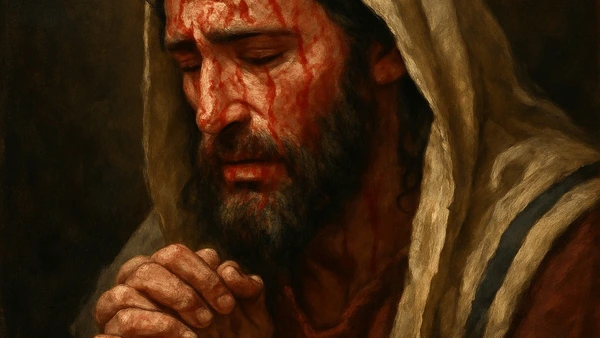
I have come across many conversations from people who either mock, or are genuinely struggling to understand the Christian faith—especially the question of why God “needed” a blood sacrifice in order to forgive us of our sins. The questions usually sound something like this:
- Isn’t blood sacrifice primitive and barbaric?
- Why can’t God just forgive without requiring blood?
- Isn’t substitution unjust? Why should an innocent person (in this case-Jesus) suffer?
- Doesn’t the Old Testament show God evolving morally?
- Couldn’t God choose a different way since he is God?
So, in this post, I am going to attempt to highlight the essentials, define the key terms, explain the necessity, and build a biblical case for why Jesus’ death on the cross is actually good news for those who believe in Him.
First let’s lay the background. When God created Adam and Eve, He gave them instructions for living in His garden. He told them they could eat from every other tree in the garden, but they were not to eat from the tree of the knowledge of good and evil, because the day they ate from it, they would surely die. That was a direct command from God—the one who created them, who owned the garden, and who had rightful authority over all He had made. The day they chose to disobey God and ate from it, what God had said would happen did indeed happen. Death entered the world. They did not die instantaneously, but the dying process began.
First, after Adam and Eve sinned and realized their nakedness, the Bible says that God made garments of skin for them and clothed them (Genesis 3:21). The question naturally arises: where did the skin come from? An animal must have died. In order to cover their shame—and by extension, their guilt—blood was shed. We are not given all the details, but the implication is clear: something innocent died so that the guilty could be covered. This is the first glimpse of substitution in Scripture, and it happens as a matter of necessity, not sentiment.
Later, Scripture makes the principle explicit: “the wages of sin is death” (Romans 6:23). Death is not arbitrary; it is the just consequence of sin. We understand this in part because even in our own societies there are laws, and violations carry penalties. Crimes such as murder or theft are not ignored simply because someone feels remorse. Justice demands a response. In the same way, God’s moral law carries consequences.
Secondly, when the Israelites were enslaved in Egypt, God raised up a deliverer—Moses. As the final plague approached, He gave very specific instructions: each household was to kill a lamb and apply its blood to the doorposts. When the angel of death passed through the land, the blood would be the sign, and judgment would “pass over” that house (Exodus 12:13). The text makes it clear that the distinguishing factor was not Israel’s innocence, but obedience to God’s provision. Any household—regardless of background—that failed to apply the blood would have faced judgment. A substitute died so the firstborn could live. This event was not random. It foreshadowed something greater. The Passover lamb pointed forward to Christ—the true and final substitute. Jesus Christ ended up becoming the Passover lamb! Only those who would “apply” his blood would escape God’s judgement.
Thirdly, the Mosaic Law made it clear why forgiveness had to be accompanied by the shedding of blood. Leviticus 17:11 says, “For the life of the flesh is in the blood… it is the blood that makes atonement for the soul.” Blood represents life given up in death. Atonement, in simple terms, is the act of making amends for a wrong or injury. In God’s design, it involved life-for-life substitution. So God established a sacrificial system that the people were to follow in order for their sins to be covered. Yet the fact that these sacrifices had to be offered year after year revealed something important. The repeated offerings showed that the blood of animals was not ultimately sufficient to remove sin. As Hebrews 10:4 states, “It is impossible for the blood of bulls and goats to take away sins.”
This raises a natural question: why kill the animals at all if their blood could not fully remove sin? Hebrews 10:1 gives the answer. The law(regarding killing animals) was not given as the final solution; it was given as a shadow of the good things to come. It was designed to point forward to a better sacrifice—one that would accomplish what the repeated offerings could not. The system itself was a preview, not the reality. God, knowing that He would one day send His Son, Jesus Christ, the perfect sacrifice, used the sacrificial system to teach Israel the principle of how forgiveness works. Through generations, this became their culture: sin required a sacrifice. For centuries, they understood that atonement involved the death of an innocent substitute.
Now imagine if this culture had not been formed. Imagine if the Israelites had no background in sacrificial offerings for sin. When John the Baptist later declared, “Behold, the Lamb of God who takes away the sin of the world!” (John 1:29), it might have sounded entirely foreign. But because of the law and the sacrifices, the imagery was familiar. In essence, the law was never the final solution. It was a shadow, pointing beyond itself to the true reality—Christ Himself. As Hebrews explains, the law was only a shadow of the good things to come, not the realities themselves (Hebrews 10:1).
So, to respond to the questions from those who are genuinely struggling—or from skeptics—I’ll address them one at a time.
1. Isn’t blood sacrifice primitive and barbaric?
It’s true that many ancient religions practiced animal and even human sacrifices. Critics often argue that Christianity simply adopted a primitive worldview. In many of those cultures, sacrifices were attempts to manipulate angry gods. But the Bible rejects that pagan logic. In Psalm 50:12–13, God makes it clear that He does not need blood or food from human hands. Sacrifices in Scripture were never magical acts designed to control God; they were covenantal and moral in nature. Furthermore, human sacrifice was explicitly forbidden (Deuteronomy 12:31). The biblical system of sacrifice was not superstition—it was grounded in God’s justice and holiness, as explained earlier.
2. Why not just forgive without blood?
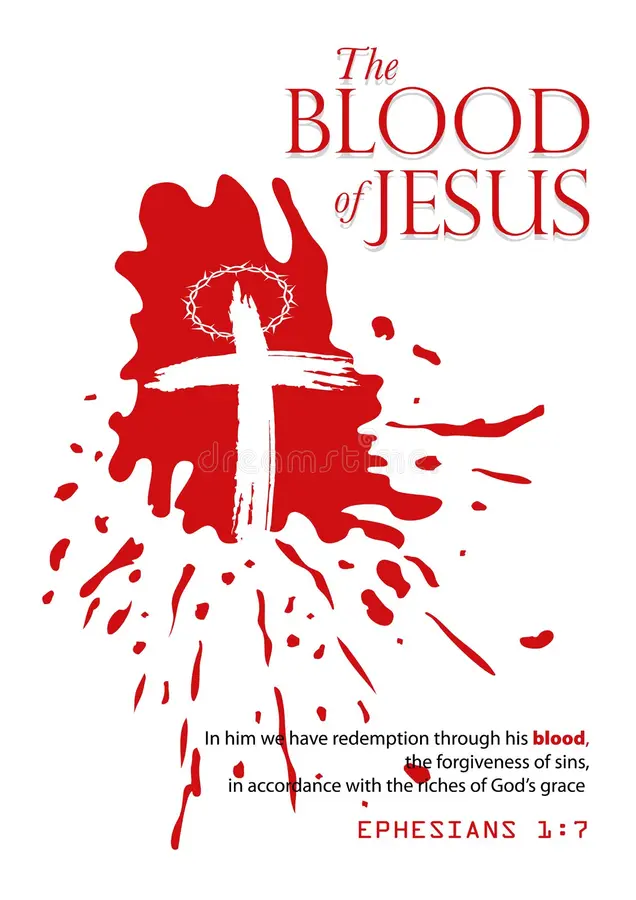
Because sin brings death according to God’s law, and God is just, justice must be upheld. Scripture declares that the wages of sin is death (Romans 6:23). If God simply ignored sin, He would cease to be just. This is where the biblical doctrine of penal substitution comes in. Penal substitution teaches that Jesus Christ bore the legal penalty for sin in the place of sinners, satisfying God’s justice so that God can rightly forgive those who trust in Him. In simple terms: Christ took the punishment we deserved, so that we could receive the righteousness He provides. That is why Scripture says that without the shedding of blood there is no forgiveness (Hebrews 9:22). It is life for life. The life of the creature is in the blood (Leviticus 17:11).
3. Isn’t substitution unjust? Why should an innocent person suffer?
The concern for this usually is: “How can God allow an innocent person (in this case-Jesus Christ) to suffer? It’s immoral”. The Bible’s answer is that Jesus was not a reluctant third party. He willingly gave Himself. As John 10:18 says, He laid down His life of His own accord. Jesus is not merely a human victim; He is God incarnate. This is not cosmic injustice. It is God Himself entering human history and bearing judgment in our place. Think of it this way: the offended Judge takes the penalty upon Himself in order to satisfy His own righteous standard, so that we can live. In Jesus, justice and mercy embrace!
4. Doesn’t the Old Testament show God evolving morally?
Some argue that the sacrificial system reflects an early, primitive stage of religion. But Scripture presents it differently. The sacrificial system was not God discovering a better moral understanding. It was intentionally designed to point forward to a more perfect and final sacrifice. The Law was not the ultimate solution; it was a shadow of the realities to come (Hebrews 10:1). It laid the foundation for God’s redemptive plan, which would ultimately be fulfilled in Christ.
5. Couldn’t God choose a different way since He is God?
This question assumes that forgiveness can exist apart from justice. But the Bible presents God as both perfectly just and perfectly merciful. If God is truly just, then sin must be addressed, and death is the rightful penalty. The cross, therefore, is not arbitrary. It is not God choosing a random method. It fits the moral structure revealed throughout Scripture. Substitution is the consistent biblical solution—justice satisfied, mercy extended, and salvation accomplished through Christ.
Imagine a convicted killer standing before a judge for sentencing. Instead of enforcing the lawful penalty, the judge simply decides to forgive the offender and let him walk free. Would that judge be considered good or just? Or would we question his integrity? What would happen to justice for the victim and their family? Forgiveness cannot be offered without someone absorbing the cost. Consider this: if someone accidentally burns down your house, and they come to apologize, you may choose to forgive them. But does your forgiveness rebuild the house? Does it restore what was lost? Someone must bear the cost of the damage. If you forgive genuinely, you often absorb the loss yourself. The point is simple—loss always has a cost. For forgiveness to be meaningful and just, the cost must be paid. In the case of sin, the Bible teaches that the penalty is death. Therefore, for God to forgive sin and still remain perfectly just, the requirement of justice must be satisfied. Otherwise, He would not be truly just.
The heart of the Christian faith is this: all have sinned and fallen short; there is not one who is righteous before God (Romans 3:23). God is holy and just, and therefore He must address the issue of sin. If He were to enforce justice on every human being strictly according to what we deserve, all would face death, since the wages of sin is death (Romans 6:23). But because of His love and mercy, God stepped in. He took on the form of man in Jesus Christ and perfectly satisfied His own justice by becoming the substitutionary Lamb who takes away the sin of the world (John 1:29). This mirrors the role of the high priest in the Old Testament, who would enter the Most Holy Place once every year with the blood of a sacrifice to make atonement for the people (Leviticus 16). Jesus, however, became our ultimate High Priest.
On the night He accomplished His work, He offered not the blood of animals, but His own blood—His own life—as the perfect and final sacrifice. Through His death, He became the substitute for all humanity who place their trust in Him. Therefore, anyone who comes to Him and accepts the sacrifice He offered is no longer condemned to death but receives eternal life in Christ (John 3:16–18). This is why the cross is the best news for all humanity. Contrary to what many assume, the Bible teaches that apart from Christ, humanity is already under condemnation. It is only when we believe in what Jesus has done and place our faith in Him for the forgiveness of our sins that we move from condemnation to life. We are adopted into the family of God and become children of God (John 1:12).
This story of redemption in the Bible is one of the most beautiful and life-giving truths I have ever encountered. It reveals the depth of God’s love and mercy—so great that He Himself took upon the penalty that was due to us, so that we might be reconciled to Him and brought back into His family. As you read this, I want to gently invite you to consider that this gift was not just for others—it was for you as well. Reflect on the sacrifice that Jesus offered on your behalf. Because of Him, you do not need to carry the burden of paying for your sins. They have already been dealt with at the cross (Romans 5:8). The Lord extends His grace to you today. He lovingly invites you to trust in Him—not as a last resort, but as your Savior and Redeemer. Will you receive Him as the One who stood in your place and bore your judgment?
Jesus Himself said, “I am the way, the truth, and the life. No one comes to the Father except through Me” (John 14:6). This is not meant to exclude people harshly, but to lovingly point us to the only sufficient path of salvation. He alone has made the way possible. My prayer is that you would place your faith in Him today, rest in His finished work, and experience the peace and assurance that comes from belonging to Him.

2 comments
Amen! The Gospel! There is no forgiveness of sin without the shedding of blood.
Amen!