
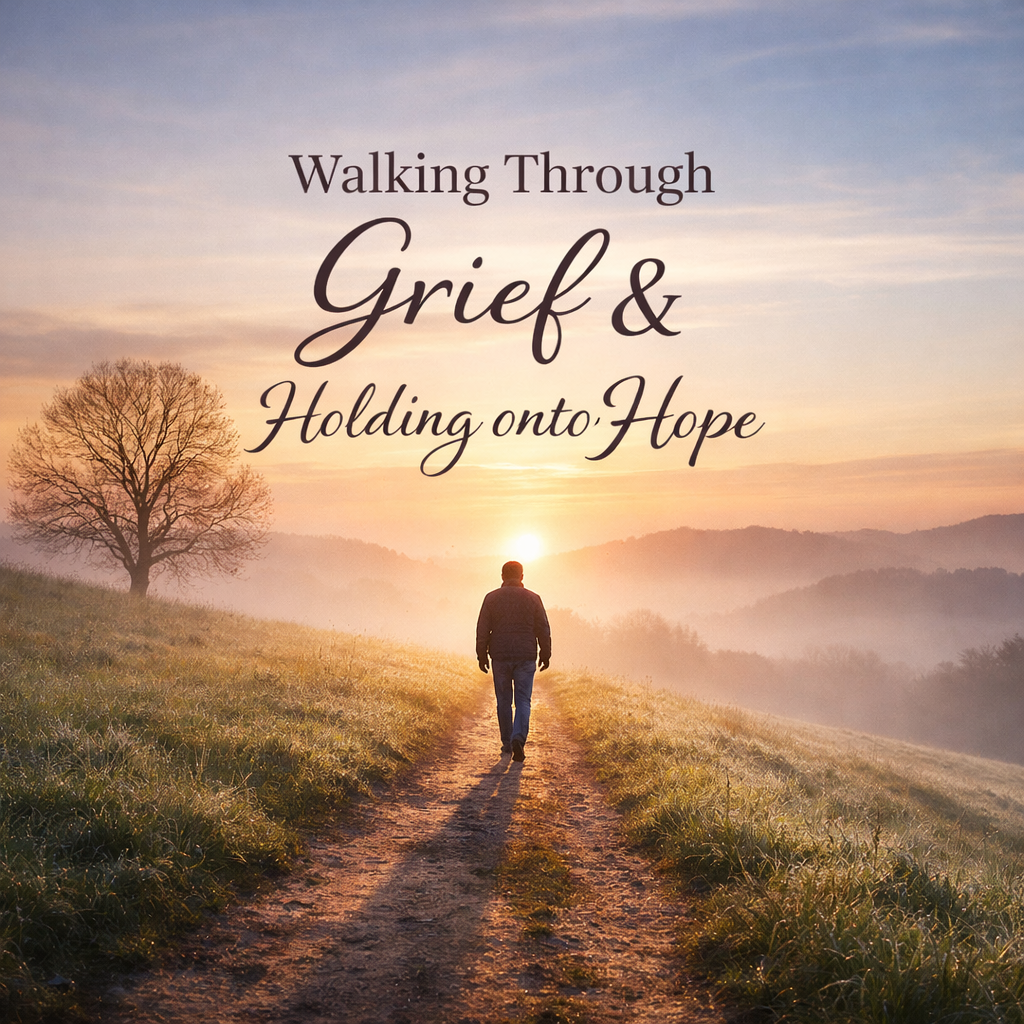
The past couple of weeks have been an incredibly difficult time, both emotionally and spiritually. A dear friend of mine—who has graciously allowed me to share this here—lost her unborn baby at 36 weeks of pregnancy. The news came as a shock. It left me perplexed, confused, and at a complete loss for words. I did not know what to say to her, or even how to begin processing it myself. So many questions rose within me—questions I found myself bringing before God.
I have always known that suffering is part of the Christian journey. Scripture reminds us that we are not only called to believe in Christ, but also to suffer for His sake. Yet knowing this truth and living through it are two very different things. When you find yourself right in the middle of deep pain and loss, grief does not feel theoretical—it is real, heavy, and unavoidable. And with it come the questions, the silence, and the cries of the heart before God.
On that fateful morning, another friend and I went to see her at the hospital. We drove mostly in silence. Every now and then, we tried to fill the quiet with a few words, but it soon felt futile. There was simply nothing that could be said. A heavy sense of hopelessness, defeat, and bewilderment hung in the air between us. So we put some music instead. The music brought tears with it. It’s like, it could draw out the hidden pain and anguish in our hearts and bring it out plainly through the tears. When we arrived at the hospital, a few other friends were already there and they filled us in on how she was. We waited for our turn to see her in the ward.
One of my very first memories of seeing her that morning was her smile. It was the last thing I expected. I had braced myself to meet someone overwhelmed by pain and grief. Instead, she welcomed us with a warm embrace—and then, to our surprise, she began to encourage us. We were confused. There was a strength about her, a quiet but steady hope that seemed to overflow. Later, she shared with us how, in the midst of the ordeal—right from the moment she learned that her baby was no more—she clung to God’s Word in Psalms 40. And the Lord, at least for that moment, granted her a kind of numbness that carried with it a strange peace. She received it as grace—God’s sustaining hand in what would otherwise have been an unbearable weight.
Then came discharge day. The moment of going home—without her baby. No parent imagines such a reality for themselves. The finality of it all brought a fresh wave of devastation. Oh, what manner of pain.
The days that followed were hard. Each day seemed to carry its own measure of sorrow. Some days were lighter—there was laughter, even moments of joking, where for a brief time we almost forgot the weight of it all. But other days were heavy with tears. Some days brought anger. Other days, questions—deep, searching questions directed at God. I, too, found myself wrestling with many questions, wondering why God would allow something so painful to happen. Together, we poured out our hearts in prayer, lamenting honestly before Him. We allowed ourselves to move through the waves of grief—hope, the sharp pain, the unanswered questions, and then hope again… over and over.
Most of the time, when Christians face such painful situations, it naturally drives us to cry out to God in agonizing prayers. These kinds of prayers are not unfamiliar to Scripture. In Psalms 13:1, David pleads with the Lord: “How long, O Lord? Will you forget me forever? How long will you hide your face from me? How long must I wrestle with my thoughts and day after day have sorrow in my heart?” These words are not the cry of someone without faith, but of someone who knew God intimately—yet felt the heavy weight of His seeming silence.
David acknowledged that, ultimately, God is good. Even though what he was experiencing did not feel good—so much so that it seemed as if God had hidden His face—David anchored his confidence in God’s unchanging character. He trusted in God’s unfailing love and recognized Him as his salvation. And in the midst of his pain, David still praised the Lord, acknowledging that God had been good to him despite the suffering.
As believers in Christ, we often wrestle with a deep tension: the pain of our circumstances can feel like a betrayal, even as we know God’s character is unchanging. This tension naturally gives rise to questions. How can a good God allow suffering—even evil—in the life of a believer? We find ourselves asking, struggling to reconcile what we feel with what we know about Him.
Yet even in the midst of this struggle, Scripture reminds us that God’s purposes are greater than our understanding. Romans 8:28 reassures us: “And we know that in all things God works for the good of those who love him, who have been called according to his purpose.” This does not mean that pain is good, or that suffering is easy to bear. Rather, it means that God can weave even the hardest experiences into His larger plan, bringing growth, character, and hope out of what seems broken.
David and Jeremiah modeled this tension for us—honest lament alongside unwavering trust. David poured out his heart in anguish, yet anchored himself in God’s steadfast love (Psalms 13). Jeremiah acknowledged deep grief, yet celebrated God’s mercies as new every morning -Lamentations 3:22–23. In the same way, believers today can cry, question, and grieve, while still leaning on the truth that God is good, faithful, and always present. Even when understanding fails, hope remains.
My friend has shown me what true faith in the Lord looks like—faith that does not waver in the storms of life, but remains firmly anchored in Him. Walking this journey alongside her has challenged my own faith and deeply encouraged me through her resilience and trust in God.
My greatest joy lies in the promise that one day, the Lord will make everything right. There will be no more suffering, no more death, no more pain or tears. He will restore all things. We hold on to the hope of meeting her precious baby in heaven, and of being together in the fullness of God’s peace.
For the Christian, hope is real. It is not just a fragile flicker in the darkness; it is a steady light that we can cling to, even in the deepest sorrow. This hope is ours to hold, and it sustains us through the trials of life.
